


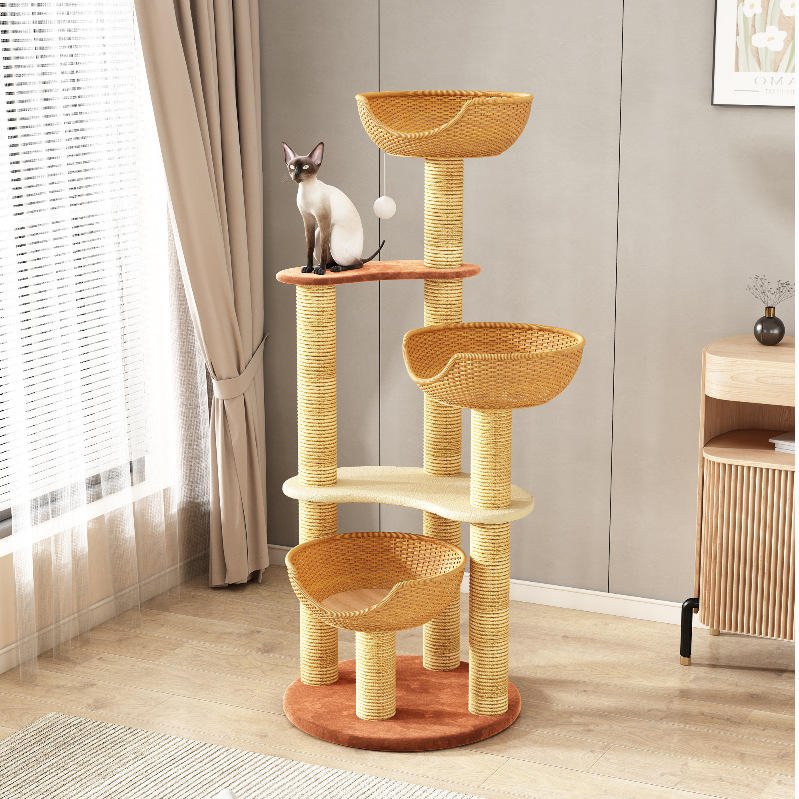


For decades, cat furniture was viewed purely as a functional necessity. It was often made of beige carpet, wrapped around a flimsy particleboard frame, and placed in the corner of a spare room where it wouldn‘t “ruin” the décor.
That era is over. Cat owners today are increasingly design-conscious. They live in smaller spaces, they invest in their homes, and they refuse to sacrifice their aesthetic standards for their pets. This shift has given rise to the “pet furniture” movement, where cat trees are designed to look and function like high-end human furniture.
The Aesthetic Shift
The modern cat owner does not want a cat tree that looks like a cat tree. They want a piece of furniture that happens to have a scratching post and a perch.
This has led to a departure from traditional carpeting in favor of materials that match contemporary home interiors. Think natural wood finishes, minimalist metal frames, and upholstery in neutral tones like beige, grey, and charcoal. Materials like felt and canvas are replacing synthetic plush. The goal is to create something that blends in, rather than stands out.
Design Principles for Pet Furniture
To create cat furniture that appeals to modern consumers, designers are borrowing principles from human furniture design.
First, slim profiles and clean lines. Bulky structures are out. Modern cat trees often feature slim vertical columns, floating shelves, and modular configurations that can hug a wall or fit into a tight corner.
Second, multi-functionality. Space is at a premium in modern homes. Designers are creating pieces that serve dual purposes. A cat tree might incorporate a bookshelf, a side table, or even a planter. This allows the owner to check two boxes with one purchase.
Third, hidden or integrated features. Scratching surfaces can be hidden behind sliding panels or integrated into the base of a side table. Hideaways can be designed as stylish cubbies that look like modern display shelves.
What Brands Need to Consider
Designing for the modern home requires a different approach to manufacturing. You are no longer just building a pet product; you are building a piece of furniture.
This means paying close attention to the quality of the materials. The wood grain needs to look authentic. The fabric needs to be durable enough to withstand claws, but soft enough to look like high-end upholstery. The hardware needs to be concealed and aesthetically pleasing.
It also means paying attention to the weight and stability. A minimalist design can sometimes compromise structural integrity. You need to ensure that the piece is heavy enough at the base to prevent tipping, while still maintaining a sleek look.
Marketing to the Aesthetic Buyer
When marketing to these consumers, the imagery is just as important as the product. Traditional pet product photography often features a cat on a carpeted tree in a generic room. Modern pet furniture brands use lifestyle photography that showcases the product in well-designed, aspirational living spaces. The cat is present, but the focus is on how well the furniture fits the room.
You should also highlight the durability and cleanability of the materials. A beautiful piece of furniture is useless if it is destroyed in a week or impossible to clean. Communicating that the product is both beautiful and practical is the key selling point.
The Bottom Line
The demand for aesthetically pleasing cat furniture is a lasting shift in the market, not a passing trend. As urban living spaces become smaller and more refined, the demand for products that seamlessly integrate into those spaces will only grow. By designing with the home in mind and marketing to the design-conscious consumer, brands can tap into a premium segment of the market that is willing to pay for beautiful, high-quality products.