
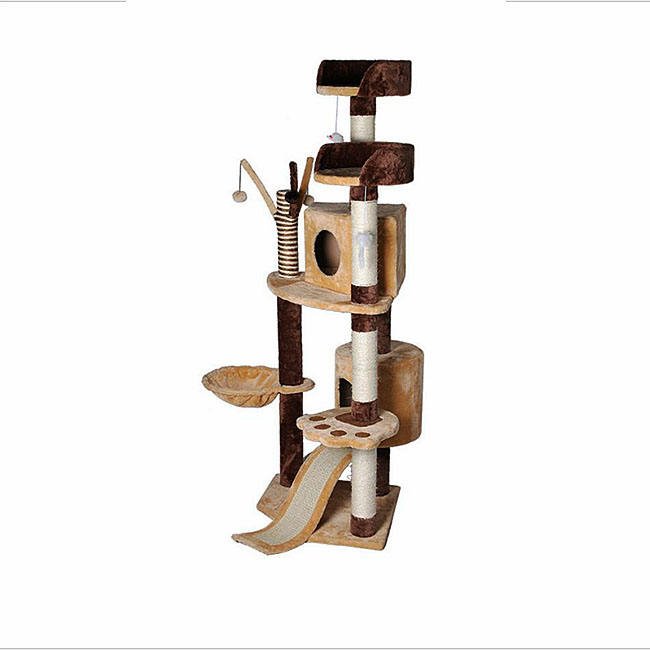
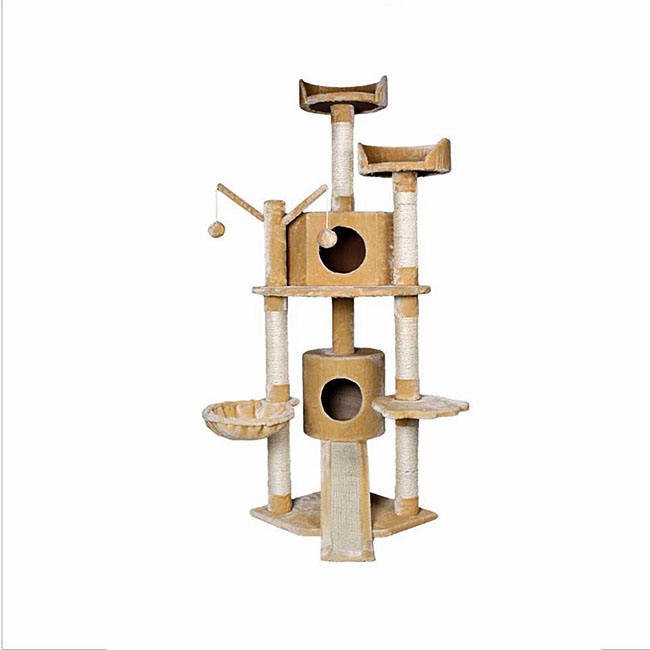
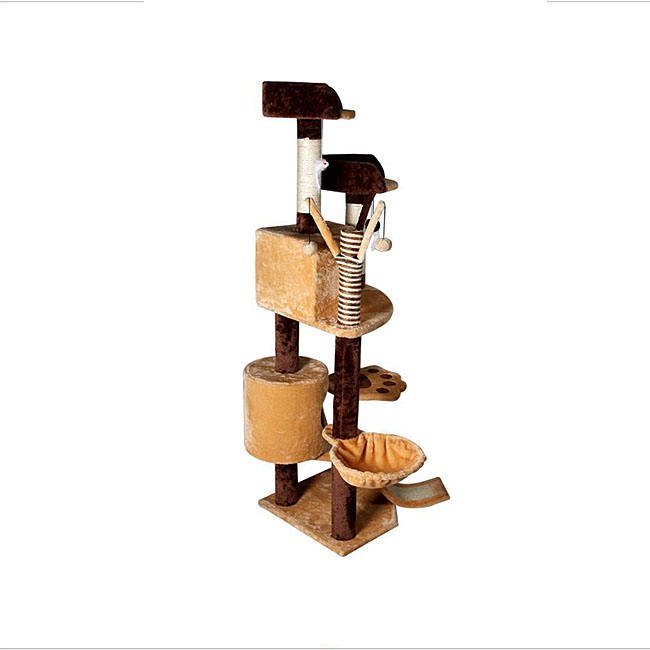
When a cat owner evaluates a cat tree, they might look at the plush fabric or the height of the highest perch. But when a cat looks at a cat tree, they see a launching pad, a scratching post, and a high-speed playground.
Tragically, thousands of pets and pet owners are injured every year by furniture that tips over. Cat trees, with their inherently tall, top-heavy designs, are particularly vulnerable to this physics problem. For brands and manufacturers, designing a stable cat tree is not a matter of guesswork; it is a rigorous application of structural engineering.
Understanding the physics of load-bearing and tip-over prevention is critical for product safety and liability reduction.
Understanding Dynamic Load vs. Static Load
The first mistake many designers make is calculating stability based solely on the static weight of the cat. A 10-pound cat sitting still on a platform creates a downward force of 10 pounds.
However, cats do not sit still. When a cat leaps onto a high platform, the impact creates a dynamic load. The force exerted on the cat tree upon landing can easily be two to three times the cat’s actual body weight. Furthermore, when a cat violently scratches a sisal post or launches off a top perch, it creates lateral forces (horizontal pushing and pulling).
If the cat tree is not engineered to withstand these dynamic and lateral forces, the center of gravity will shift outside the footprint of the base, resulting in a tip-over.
The Geometry of a Stable Base
The golden rule of cat tree stability is the ratio of base width to overall height.
If a cat tree is 150 cm tall, the base needs to be wide and heavy enough to counteract the leverage created by a jumping cat. A good rule of thumb is that the base should be at least one-third to one-half the width of the tree’s total height, and it must be constructed from heavy, high-density materials (like thick MDF or solid wood), not just cardboard or thin particleboard.
Furthermore, the weight distribution must be considered. A dense, heavy base lowers the overall center of gravity. Some innovative designs even incorporate steel plates into the base or use a weighted water tank to anchor the tree without taking up more floor space.
The Role of Wall Anchors
No matter how heavy the base is, physics dictates that a tall, narrow object can be tipped over. Therefore, for any cat tree taller than 90 cm, an anti-tip wall anchor is not an optional accessory; it is a mandatory safety feature.
Unfortunately, many consumers do not install these anchors because they rent their homes or lack tools. Designers must create anchoring systems that require minimal damage (e.g., a single screw or a heavy-duty adhesive strap) and provide crystal-clear instructions.
Material Rigidity and Joint Flex
Stability is not just about the base; it is about the flex of the poles and the integrity of the joints.
If the scratching posts are made of thin cardboard tubes, they will bow and flex under the weight of a jumping cat, which creates a “wobbling” sensation. This wobble not only feels unsafe to the cat but also loosens the threaded joints over time. Using thick PVC pipes or solid wood cores inside the posts prevents bowing and ensures the structural integrity of the tree.
Additionally, all hardware—screws, bolts, and connectors—must be rated to withstand dynamic loads. Lock washers or thread-locking fluid should be used to prevent bolts from vibrating loose over months of vigorous scratching and jumping.
Ultimately, a cat tree is a piece of kinetic furniture. Designing for safety means respecting the physics of a flying cat. By prioritizing wide, heavy bases, rigid materials, and mandatory wall anchoring, brands can prevent tragic accidents and build a reputation for uncompromising safety and quality.